
Struggling with clutter? Learn how to give every item a designated home, making organizing easier for your ADHD brain.
I think one of my biggest problems when it comes to organizing my home is knowing where things go.
If an item doesn’t have a designated spot, it gets put in random places- AKA, gets lost.
It’s super frustrating, and makes me feel like I’m just a mess.
The key to having an organized home isn’t necessarily decluttering, but giving every item a specific home.
That naturally gets rid of clutter and makes your house feel more manageable again!
Step 1: Categorize Your Items
Before assigning homes to items, you need to understand what you own and how you use them. Group items into categories based on purpose and frequency of use:
- Daily use: These are items you use every day (Keys, phone, coffee mug, etc.). Their homes need to be in easy-to-reach spots.
- Weekly use: These are things you use often but not daily (Certain kitchen tools, seasonal shoes, etc.). These should go in accessible but less prominent places.
- Rarely used: These are items you only use occasionally (holiday decorations, keepsakes, etc.). Store these out of the way, like a closet or attic.
Step 2: Find Logical Homes for Each Category
Now that you have your categories, it’s time to give these items a home!
Here’s the important thing: The homes for your items need to make sense for YOU and your daily routine.
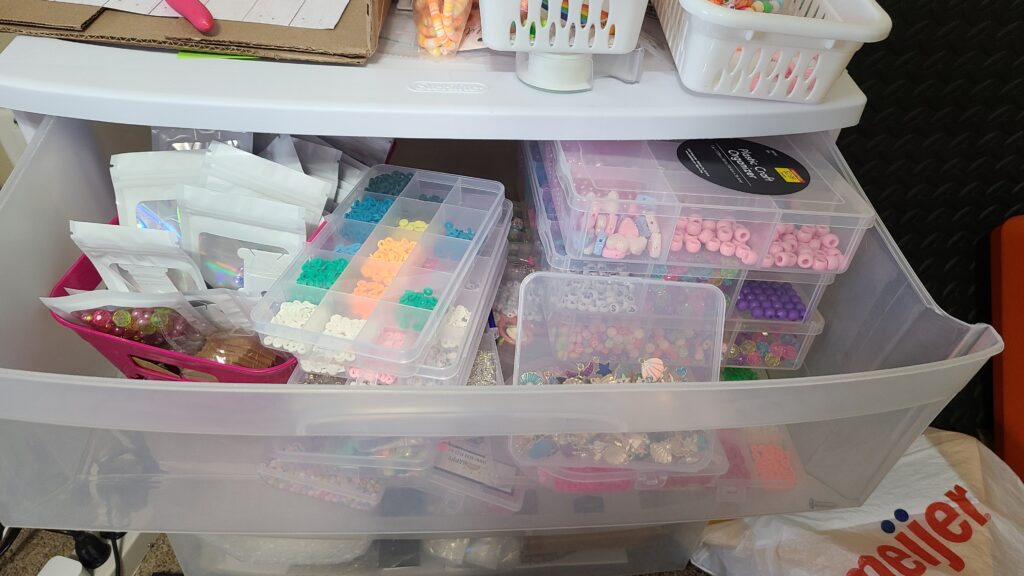
- Keep similar items together: All your specific craft supplies go in the same drawer; cleaning supplies in the same cabinet; pet toys in the same basket. This helps keep all the things from being spread throughout the house.
- Store items where you use them: Keep chargers by your work station. Place a dish where you always drop your keys. Keep a supply of hair ties in the bathroom, or wherever you get ready.
- Label everything: This can help your brain quickly recognize where things belong. Use printed labels, tape, or sticky notes.
One specific thing that helps me is keeping two sets of bathroom cleaning supplies, one in each bathroom.
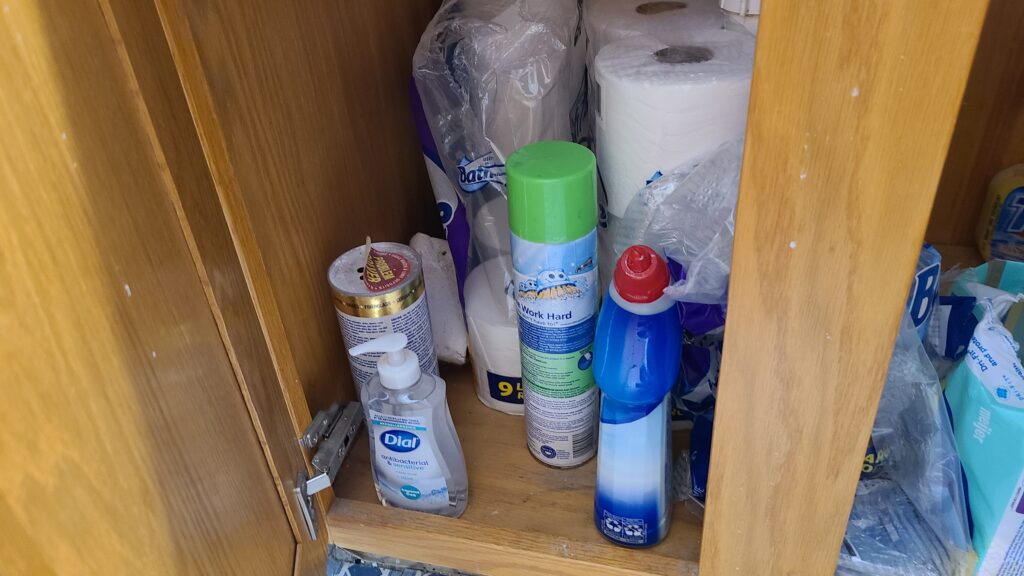
I get overwhelmed thinking about lugging all the cleaning supplies from one bathroom to the other. So each set has a home under each sink, and that actually makes me more likely to clean the bathrooms more often.
Step 3: What If You Can’t Think of a Home for Something?
Some items are tricky- they may not clearly belong in a specific home. If that happens, ask yourself a few questions:
- Do I actually need this? If you don’t use it, consider donating it.
- What other items is this related to? Extra charging cords could be stored with other electronics.
- Where would I naturally look for it? This place may not make sense for others, but it needs to make sense for you.
- Can I create a “Miscellaneous” bin? If you’re truly not sure, use a small bin for those random items. But set a reminder to go through it regularly!
Step 4: Maintain the System Without Overthinking
Once everything has a home, the hard part is actually keeping it that way. Our brains struggle with putting things away, so let’s make it as easy as possible!
- Use open bins and baskets: If there’s no lid, there’s one less barrier to putting that item away.
- Keep the storage visible: Clear bins and labeled shelves get rid of the “out of sight, out of mind” mentality.
- Do a quick reset daily: Spend around 5 minutes each night putting things where they belong. Setting a timer helps me get it done more quickly!
Giving every item a home really simplifies organizing and reduces decision fatigue. You won’t need to move things from one pile to another anymore- everything has a place, and you’ll know where to find it!
Just like with everything, start small. Pick one area of your home and start finding homes for the items. You’ll definitely thank yourself later!
Leave a comment and tell me: Do you struggle with finding a home for your things? What’s helped for you? I’d love to know!

Jaime is a Nutrition Coach and professional writer. She enjoys cooking easy meals, running, and learning more about food.
Jaime specializes in helping women with ADHD organize their home and brains in a way that’s do-able and not overwhelming.
Leave a Reply