
Do you have ADHD and get overwhelmed with a cluttered work desk? Here are some action steps to organize your desk and keep it that way!
When you have ADHD, things like organization become much harder in daily life for a lot of people.
And working from home makes this much more difficult for me. When you are your own boss, it’s hard to make yourself stay on track. Both with work, and staying organized.
I know for a fact that when my office desk is cluttered, my ADHD brain can’t function. But it can be hard to know where to start.

Are you in the same boat? The good news is, you CAN get organized and even stay that way! Here are some actually do-able tips to help organize an ADHD-friendly desk.

The first step: Break it all down into manageable steps
If you’re anything like me, you probably get overwhelmed really easily. And thinking about organizing an entire desk gives me the chills.
Thankfully, breaking down this daunting task into smaller steps can really help.
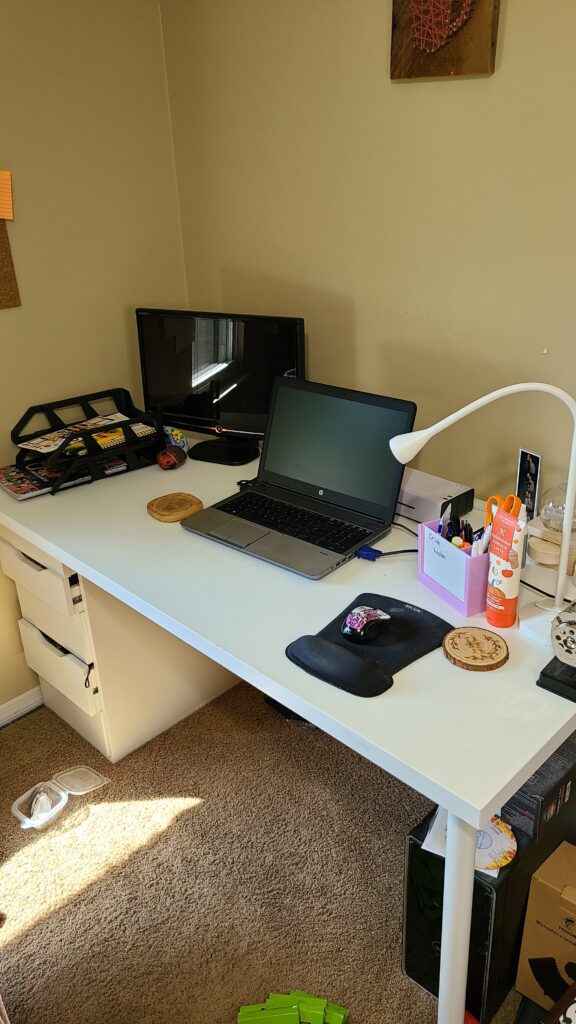
The picture above is what my desk looked like when I first began. I started by writing down each section I needed to work on:
- The far corner of the desk top
- The pencil holder
- The top drawer (AKA my junk drawer)
- The drawer second from the top, with all my planning supplies
Time Management
One ADHD struggle is doing important tasks that I don’t want to do. I’ll put them off and then let that task loom over my head.
One thing that helps is setting a timer! I’ll put a timer on my phone for 15-25 minutes, and I’ll race the clock to see how much I can get done in that time limit. And once the timer goes off, I’ll take a short break.
That’s also known as the Pomodoro Technique, where you work for a short period of time and then take short breaks. Setting time limits actually helps me focus better, helps me keep track of time, and prevents burnout.
And setting a timer helps with time blindness. You may feel like it’s only been 15 minutes, but it’s actually been an hour and now your energy levels are shot for the day.

Use Sticky Notes
I’ll be honest, Post-Its are my best friend. I always have a few packs available and use them for a few different things:
- Writing down a recipe I’m developing for a blog post
- Creating a to-do list for important and specific tasks
- Writing down reminders and due dates for time-sensitive items
I like sticky notes because I can, well, stick them pretty much anywhere it’ll catch my attention and be in plain sight. I’ll put them in my planner that I carry with me, and I also hang them on my cork bulletin board right beside my desk. Visual cues are great for ADHD brains, and something I desperately need every day!
Color Coding Items
I do this a lot in my business, but you can use this visual organizing tool for other means too.
Let’s go back to the sticky notes example. I have different distinctive colors for different things. Yellow is for recipes, and blue is for to-do lists. I can easily look at the colors and figure out what can be saved for later, or what needs done now.
Along the same line, you can put sticky notes on the edge of your computer, and color code them for different tasks. This visual cue can make a huge difference and can help bring a sense of order to the chaos in our brains.
Using Bins and Containers
I have ADHD. I THRIVE on organization and love when things look pretty. So anytime I can buy containers is a good time.
And you don’t have to spend a ton of money, either! Dollar Tree has an amazing assortment of containers, in really cute colors.
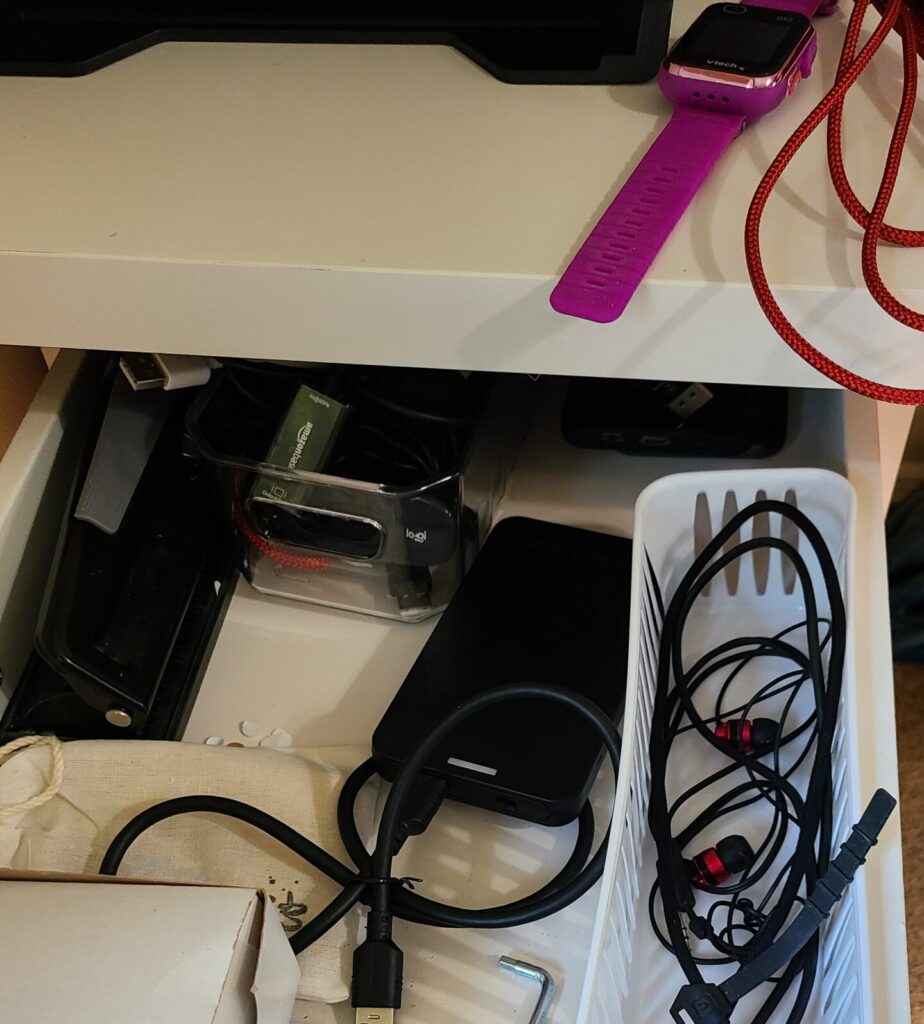
In my top drawer, I use a couple small bins to hold all of my charging cords and other similar items. One of them has the 3 or 4 I use most often, while the others are ones I only use occasionally. I have some clear bins and clear containers, which helps me see exactly what’s inside.

In my next drawer, I emptied the little boxes my markers came in and added them to a small bin. And I had my sticky notes in a zipper bag, but laid them vertically in another bin for easier access.
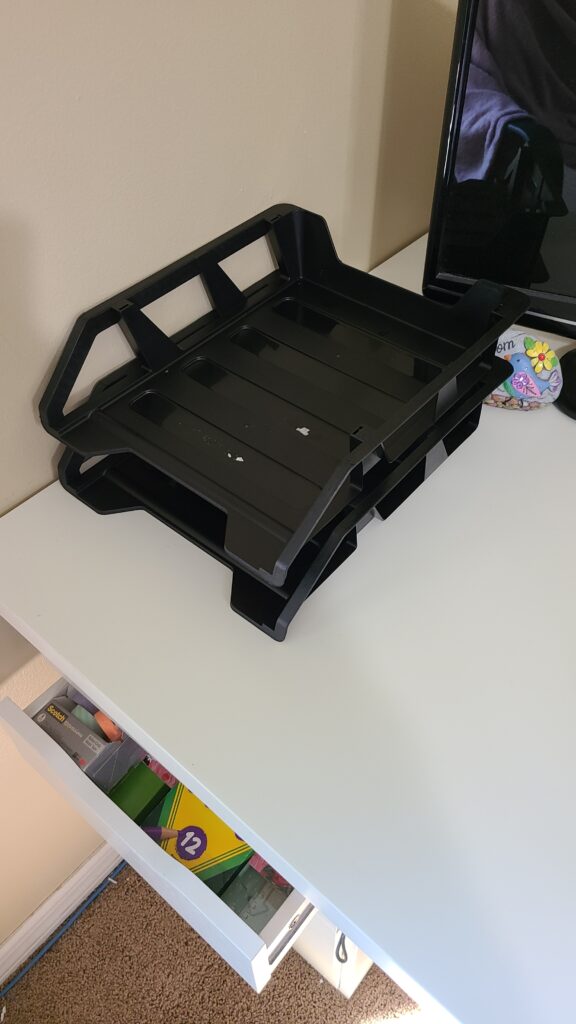
Lastly, I bought two stackable trays to put on the left side of my desk. My planner and daily supplies are on top, while the bottom tray is for papers I need to deal with soon. This is already helping with the piles of papers I constantly throw on my desk!
Create a home for everything
This is one rule I try to live by: Every item needs a home. I’m not perfect at it, but it does help create a sense of order.
Every thing on your desk needs a designated spot. When you’re finished using something, make sure it goes back to its home.
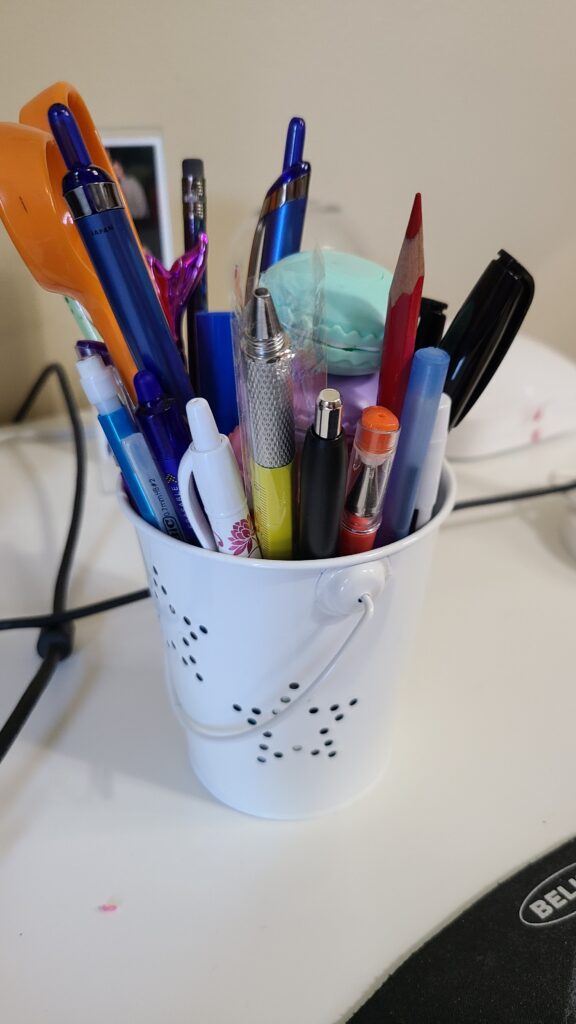
A pencil holder is a perfect example. I used a small decorative bucket and found that I had way too much clutter in it. So I went to Dollar Tree and bought a smaller holder, and just decluttered.
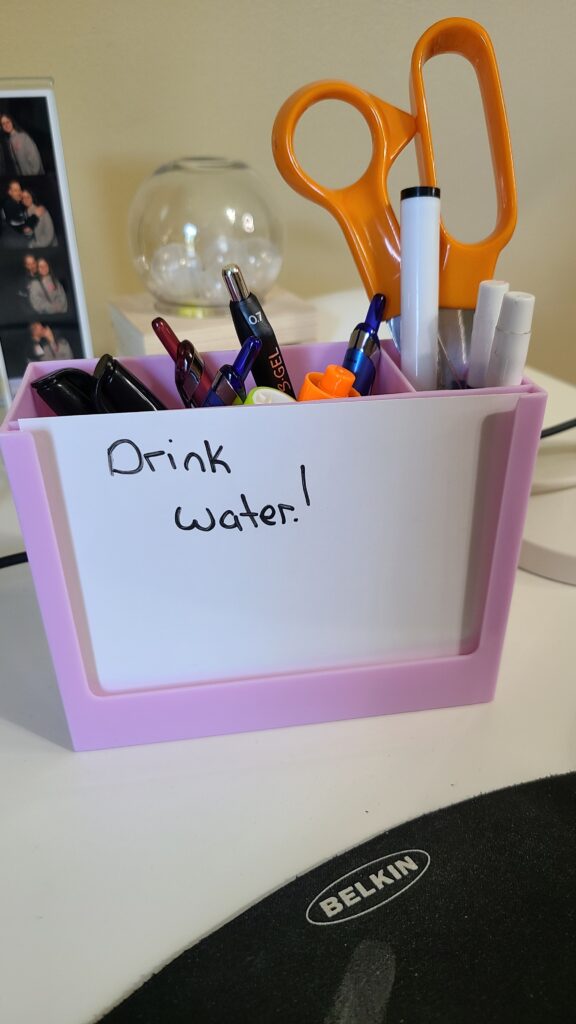
This one even has a white board built in, so I can write little notes to myself!
Because I’m always drinking something, I have two coasters for my water bottle and coffee. What is it with us ADHD folks and constantly having multiple drinks sitting around?
Get help from family and friends
We can’t do this alone! Sometimes we need a little extra help. Friends and family are there to help give solutions or sort through items with you.
If you like working on tasks yourself, consider body doubling. That’s where you work while another person- a family member or friend- sits in the same room, working on something different. You don’t have to interact at all; but the simple fact that someone else is there can help keep you accountable.
You can also look for an ADHD coach or professional organizer if you need extra help. They’re available to give you tailored support and tips that work with your brain!
Be consistent
Consistency is key. And honestly, I’m not good at it!
But if I want to stay organized, I need to keep up with the maintenance. Create a routine for organizing your desk on a regular basis. It could be simply tidying up your desk and office supplies every evening, or scheduling time once every week or two to do a deep-clean and declutter.
Pro tip: Use a reminder app like ToDoist to put recurring tasks on a to-do list. For example, you can create a task called “Deep clean desk every Thursday” and that task will pop up every Thursday to remind you. This has been a great way to keep me accountable!
Doing this consistently will create a habit and you’ll naturally start doing this routinely. Having a clutter-free workspace seriously helps me focus a whole lot better.
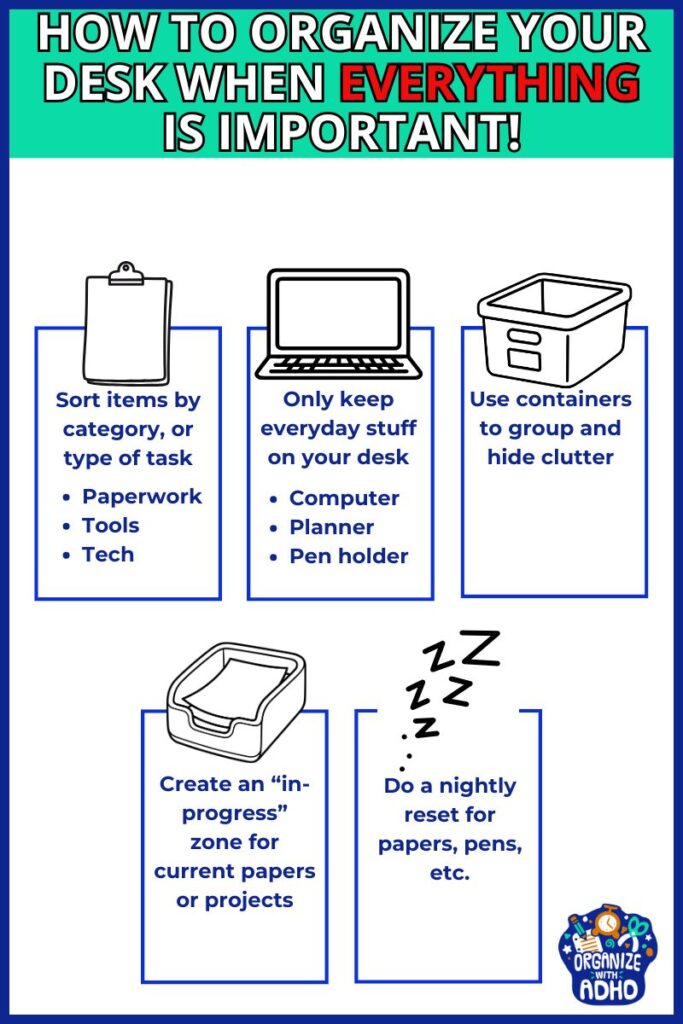
How to organize when everything on your desk is important
When EVERYTHING on your desk is important, it’s not about getting rid of stuff- it’s about creating a system that gives each item a home without overwhelming yourself every time you sit at your desk.
Here are a few things to try:
Sort items by category, or type of task
Group specific items like:
- Paperwork (Receipts, bills, etc.)
- Tools (Stapler, scissors, pens)
- Tech (Chargers, headphones)
- Daily use vs. Occasional use– to help you see what you use all the time, instead of just sometimes.
Only keep “every day” stuff on your desk
The top of your desk is the most important. Only the things you use every day should be left out.
- Keep the essentials in arm’s reach- Laptop, planner, pen holder, etc.
- Move the “important but not daily” items into drawers or other nearby containers.
Think of it like this: If you use it 10 times a day, keep it on top. If you use it only once a week, it can go in a drawer.
Use containers
Find trays, drawer organizers, or small bins to group and hide your clutter.
If they’re clear containers, even better. Non opaque containers means you can see what’s inside, and that makes it easier to find what’s inside if you need it.
Create an “in-progress” zone
If you have any papers or a current project that you’re actively working on, put them in their own tray.
You can still keep them on top of your desk- just not ALL OVER your desk. I’d rather have one pile of things I need to do, rather than scattered chaos.
Do a nightly reset
Set a timer for 2 minutes every night and reset your desk. Put all the pens where they belong, file away the papers you finished, etc. It doesn’t take much time and it makes for a better work environment.
This small step makes me feel calmer when I sit down at a clean desk each morning. I don’t always do things for my future self; but when I do, I feel much better!
Final thoughts
With the right tools and organizational system, you can keep your home office desk organized and de-cluttered. I know it’s hard, trust me. The hardest thing is getting started. But following the simple suggestions above can help create a peaceful mind and work space!
Leave a comment and tell me: What is one thing you struggle with when it comes to keeping your desk organized?

Jaime is a Nutrition Coach and professional writer. She enjoys cooking easy meals, running, and learning more about food.
Jaime specializes in helping women with ADHD organize their home and brains in a way that’s do-able and not overwhelming.
Leave a Reply